The CFO Behind Nvidia's Circular Financing Now Runs Nvidia
Nvidia has guaranteed up to $108 billion for its customers, $105 billion of it for one OpenAI data-center campus. Its CFO, who defended those deals, now runs the company. I give 3% that she formally cuts even $1 billion of it for risk reasons by June 2027.
By Viet Phan12 November 20266 min read
Odds as of 12 November 2026.
On June 24, 2025, US export inspectors walked into the Singapore office of an Nvidia customer called Megaspeed.
Its boss was there. Her name is Alice Huang.
The same day, Singapore police interviewed her and took her passport.
Seventeen months later, Nvidia's founder, Jensen Huang, resigned.
He'd been having an affair with her, the Financial Times reported.
The Customer
Megaspeed rents out AI computing power. It's registered in Singapore.
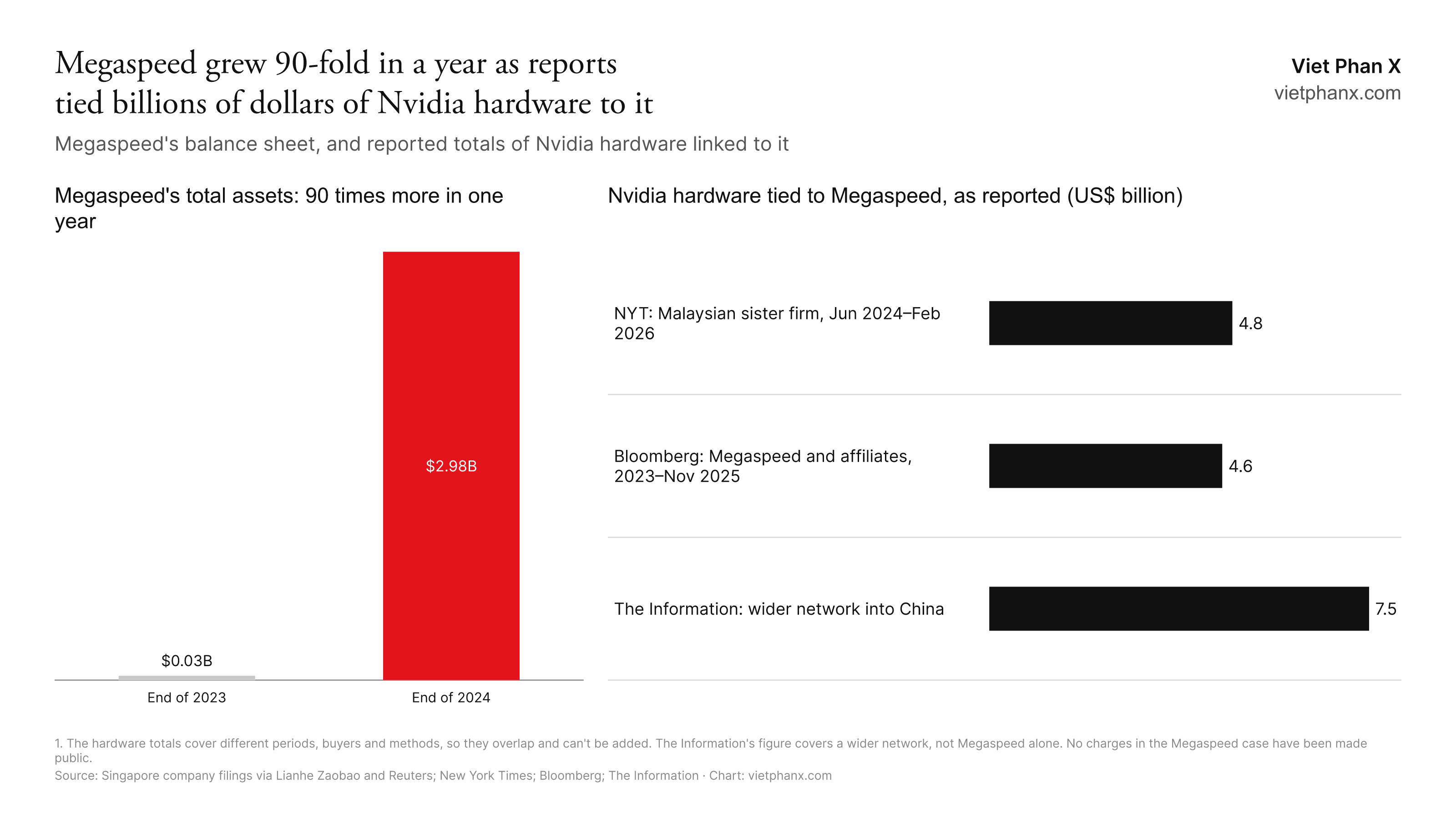
At the end of 2023, it owned about $33 million in assets.
A year later: $3 billion.
Ninety times, in one year.
It was buying Nvidia hardware. Trade records reviewed by the New York Times show at least $4.8 billion of equipment with Nvidia chips bought by Megaspeed's Malaysian sister company between June 2024 and February 2026.
The question is where those chips ended up.
China can't legally buy Nvidia's best chips. US export rules block them.
There are two ways around that. Keep the servers in Malaysia and let Chinese companies rent them over the internet, which is a grey zone. Or ship the servers on to China, which is smuggling.
Three sets of investigators are looking at Megaspeed:
- Singapore opened a case in February 2025, over suspected false declarations on server purchases.
- The US Commerce Department inspected Megaspeed's hardware in 2025, with Alice Huang in the room.
- The US Justice Department is investigating it for export violations, CBS News reported.
No charges in the Megaspeed case have been made public.
The numbers don't add up, though. Nvidia says it stopped selling to Megaspeed in June 2025. Bloomberg found Malaysian customs records showing 17,544 of Nvidia's newest processors, worth $787 million, imported for Megaspeed in November 2025.
Bloomberg also reported a gap of about 50,000 chips between what Nvidia's inspectors counted and what suppliers had shipped. Nvidia says it checked more warehouses.
And it reported that in the summer of 2025, Nvidia's top lawyer called a senior Commerce official about Alice Huang's detention in Singapore.
It has happened before. In a separate case this October, a contractor for the server maker Supermicro pleaded guilty to diverting AI servers to China. Prosecutors say the scheme put dummy servers in place for inspectors to count.
The Introduction
Alice Huang is a Hong Kong-based executive. Singapore's government says she was Megaspeed's chief executive, chair and one of its key controllers.

Her husband introduced her to Jensen Huang, according to the Wall Street Journal. People who knew the couple told the Journal that he tolerated the affair for about two years.
On October 29, the New York Times reported that US intelligence considered her a Chinese intelligence asset.
On November 7, it reported on a classified memo: China's Ministry of State Security had recruited her to gather intelligence on Huang, and possibly to push Nvidia's position on selling chips to China.
China's foreign ministry called it "purely unsubstantiated."
Singapore, for its part, says it never investigated her for spying. In February 2026 it dropped its case against her for lack of evidence. But it said she had knowingly given police false information to play down her role at Megaspeed.
She got her passport back, a stern warning, and a ban on re-entering Singapore.
Then Nvidia's board blinked.
- November 8. Huang emailed every employee: "I was unfaithful to my wife." The board said it had confidence in him.
- November 9. President Trump said Huang told him he didn't know she was a spy, and that he believed him.
- November 11. The New York Times reported a second relationship, with an Nvidia vice president who reported to him. The board accepted his resignation that day.
Three days, from confidence to the exit.
The next morning, Trump posted his pick for the job: "there is only one man to take his place - TIM COOK of Apple."
Nvidia picked its CFO.
The Co-Signer
Colette Kress has run Nvidia's money since 2013. She's interim CEO now, and she keeps the CFO job too.
To understand why that matters, think of a carmaker that co-signs its customers' car loans, so they can afford its cars.
Sales look great. As long as the buyers keep paying.
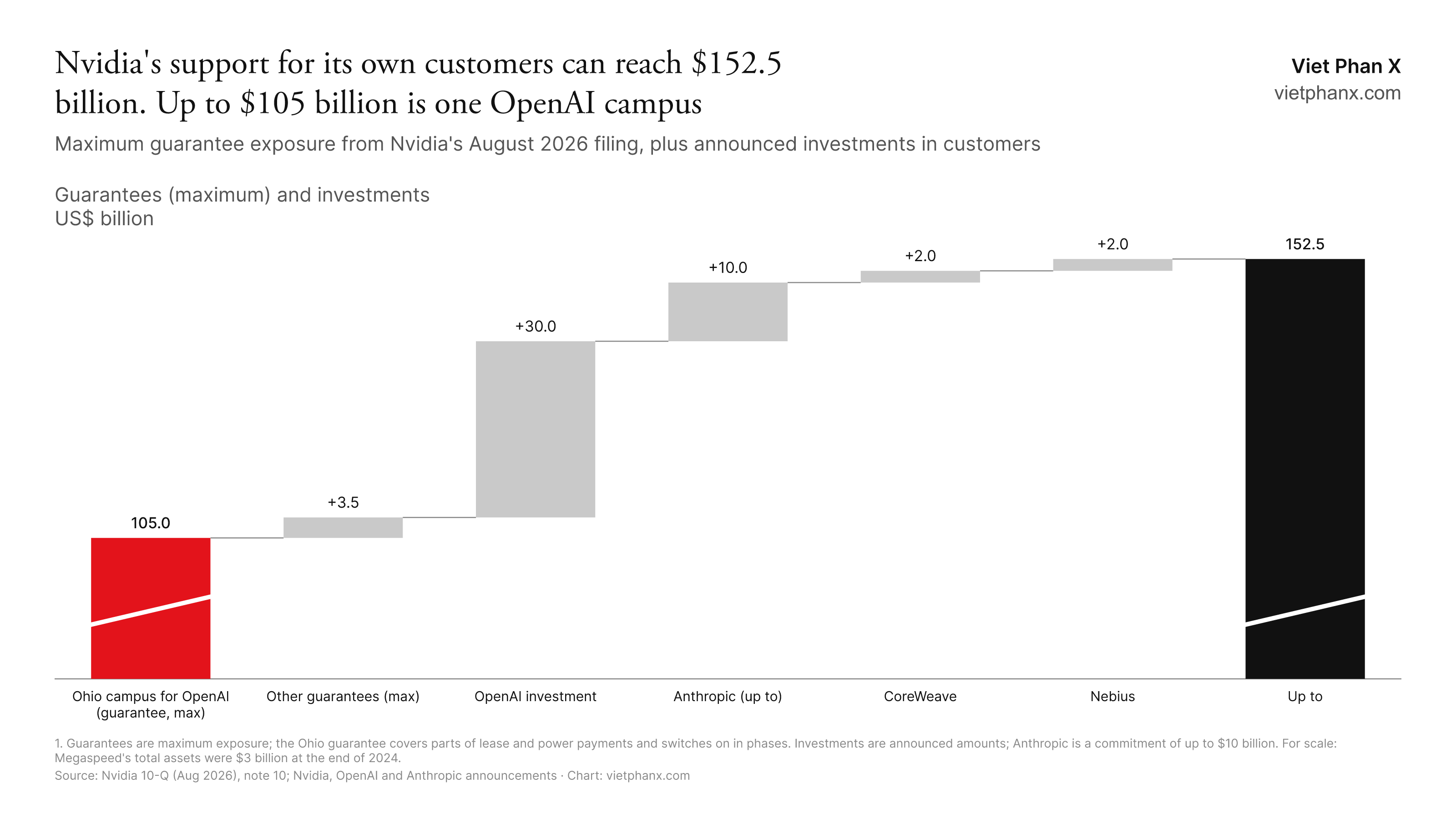
That's Nvidia today. Its August filing lists guarantees for its customers with a maximum exposure of $108.5 billion.
$105 billion of it is for one place: a data-center campus in Ohio, built for OpenAI. Nvidia backs part of the lease and power payments there, and the guarantees switch on in phases as the campus is built.
On top of that, Nvidia invests in its biggest customers: $30 billion in OpenAI's February round, a commitment of up to $10 billion to Anthropic, and $2 billion each in CoreWeave and Nebius.
Critics call it circular financing: Nvidia's money helps customers buy Nvidia's chips.
Kress answered them on the August earnings call. She said Nvidia knows "some will call this circular financing." Nvidia's position is that it isn't.
She defended these deals as CFO. Now she runs the company that carries them.
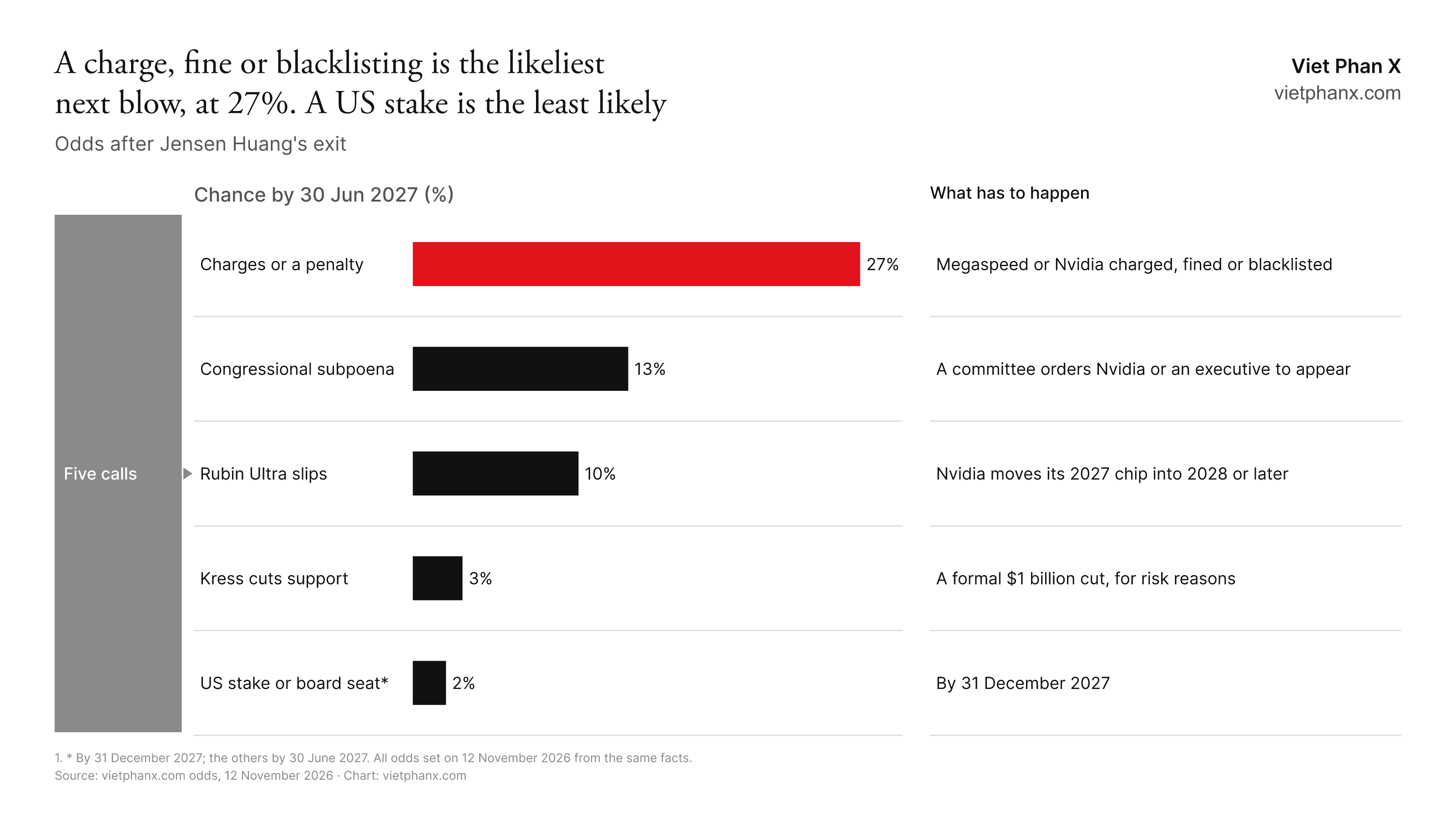
I give 3% that she formally cuts even $1 billion of it, for risk reasons, by June.
The board said on November 12 that customer commitments continue. And the risk runs the other way: if a big borrower can't pay, the co-signer gets the bill.
The CFO Handover
Nvidia isn't the first giant to hand the keys to its CFO after a sudden exit.
HP, 2005. The CFO ran it for seven weeks, until the board hired an outsider.
Boeing, 2005. The CEO left over an affair with an employee. The CFO ran it for four months, until the board hired an outsider.
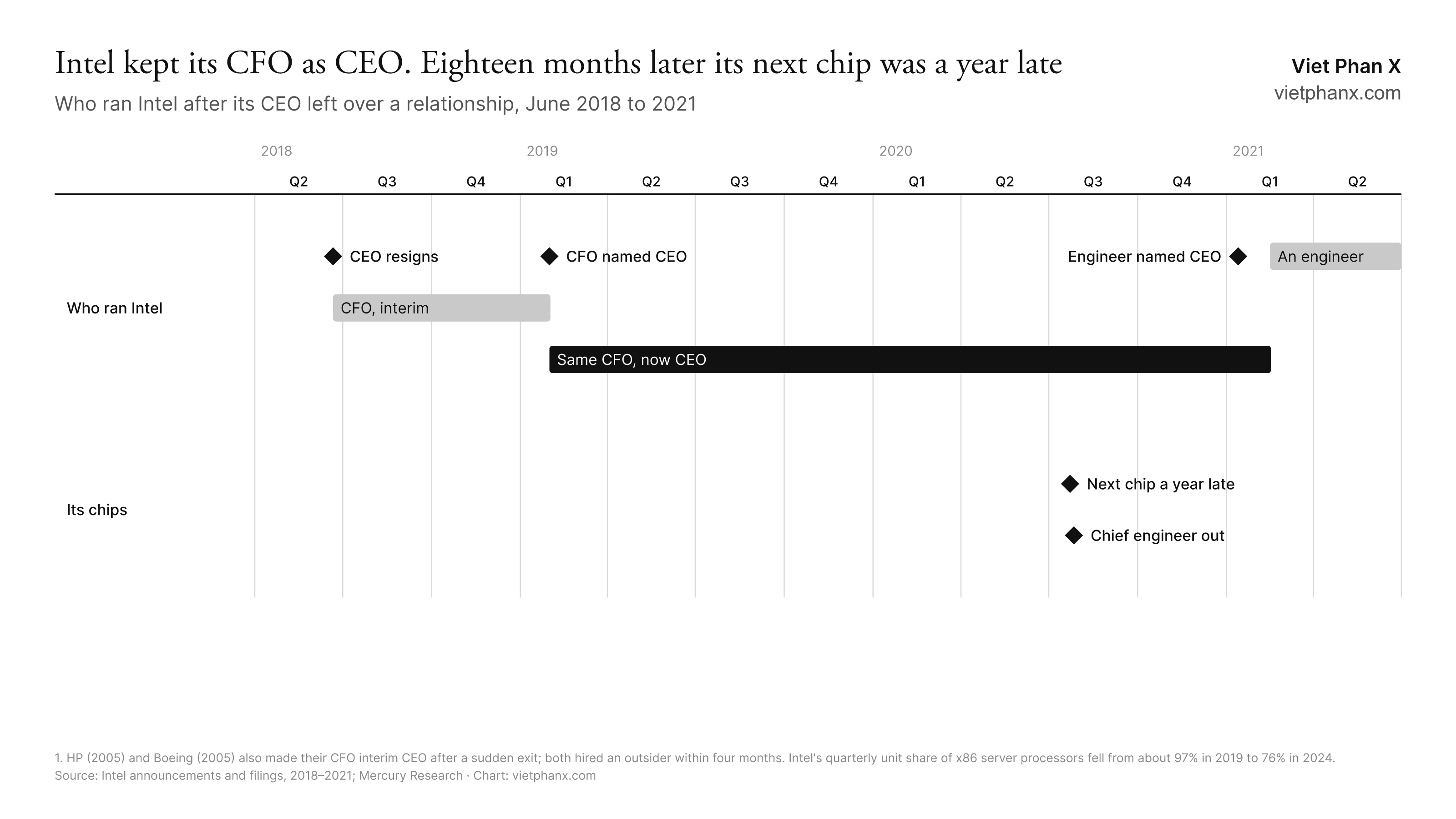
Intel, 2018. The CEO left over a past relationship with an employee. The CFO got the job for good. Eighteen months later, Intel said its next chip process was a year late. In 2021 the board replaced him with an engineer.
Two of the three exits started with a relationship.
So did this one.
Nvidia's next big chip, Rubin Ultra, is officially due in 2027.
In July, the analyst firm SemiAnalysis reported that the rack it needs had slipped to 2028. Nvidia denied it and called the roadmap intact.
I give 10% that Nvidia officially pushes Rubin Ultra out of 2027. The call settles on Nvidia's own word, not on reports.
What Happens Next
Congress first. Republicans who chair three House committees asked Huang for a closed-door briefing. One of them says he's expected to testify within about a week.
He's cooperating, so a subpoena, a legal order to appear, is less likely. I give it 13%.
Then the smuggling case. I give 27% that US prosecutors or the Commerce Department charge or penalize Nvidia or Megaspeed by June.
The likeliest route is a blacklist. The Commerce Department can add Megaspeed to its Entity List, which means it needs a US license to buy American technology, and those are usually refused. Other agencies back the move, the Financial Times reported.
Then Washington. The Trump administration took a stake in Intel in 2025. I give 2% that it takes one in Nvidia, or a board seat, by the end of 2027.
Megaspeed's whole balance sheet is $3 billion.
Nvidia's guarantee for one Ohio campus can reach 35 times that.
Taipei dinner, 22 May 2025: still from Taiwanese TV news footage.
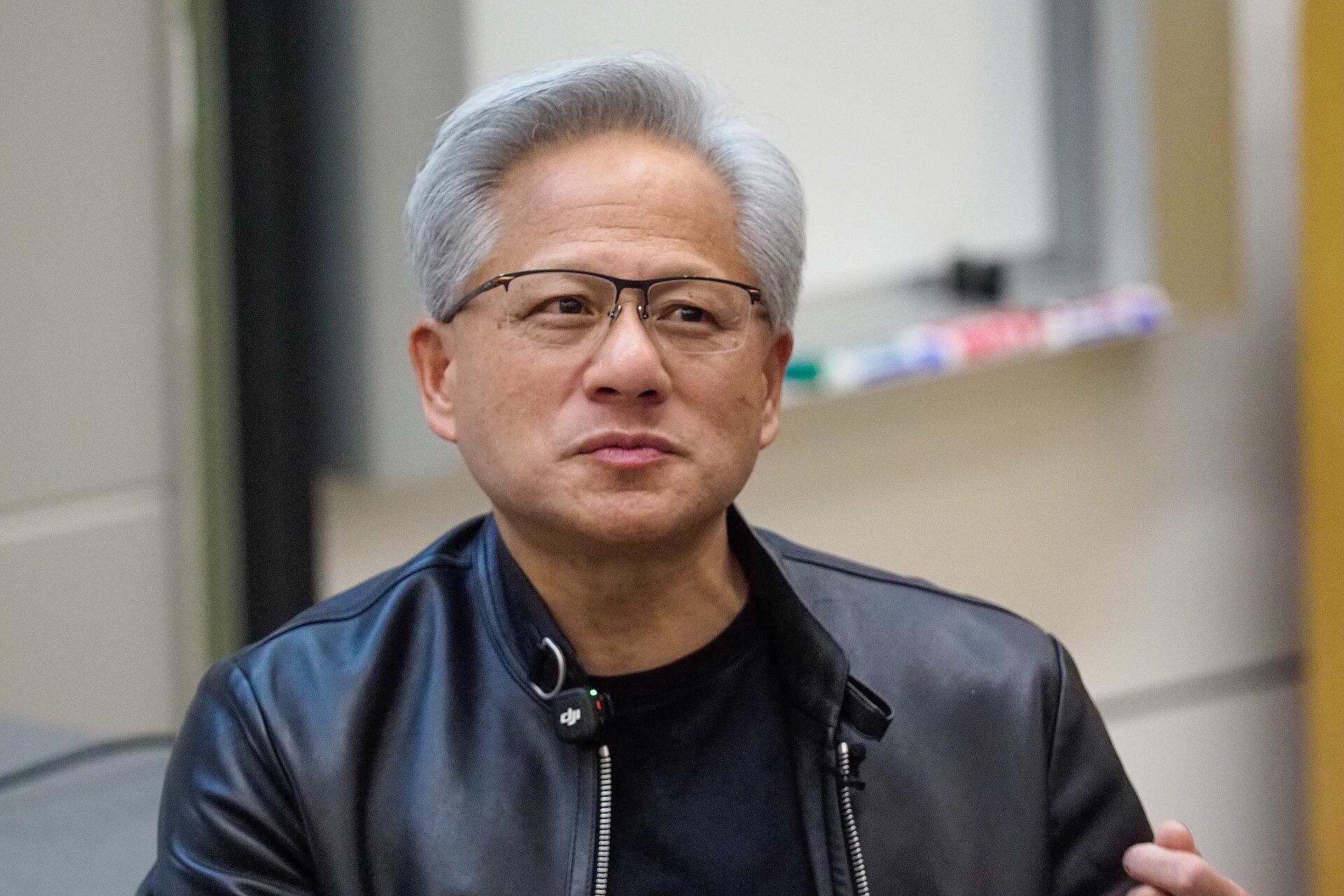
Photo of Jensen Huang (cropped): Anderseidesvik, Stanford University, 30 April 2026, CC BY-SA 4.0, via Wikimedia Commons.

Copyright Viet Phan 2026. All rights reserved.Reuse this content
 On top of that, Nvidia invests in its biggest customers: $30 billion in OpenAI's February round, a commitment of up to $10 billion to…Anthropic Lost $80.7 Billion. Its Last Quarter Made a Profit.9 min · 8 charts
 On top of that, Nvidia invests in its biggest customers: $30 billion in OpenAI's February round, a commitment of up to $10 billion to…CoreWeave's Two Prices for Money: 16% on Its Own Name, 7% on Its Customers'3 min · 3 charts